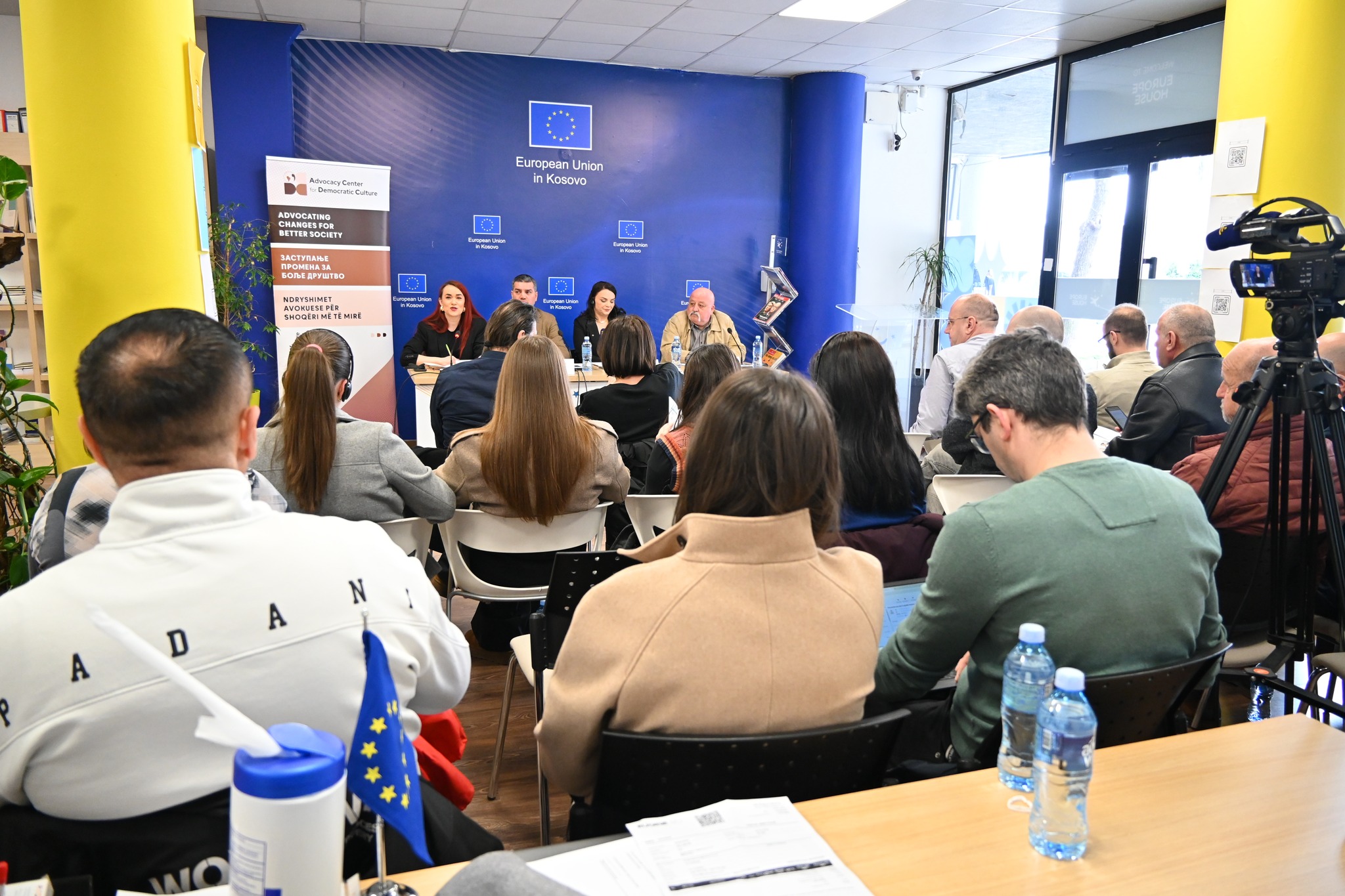
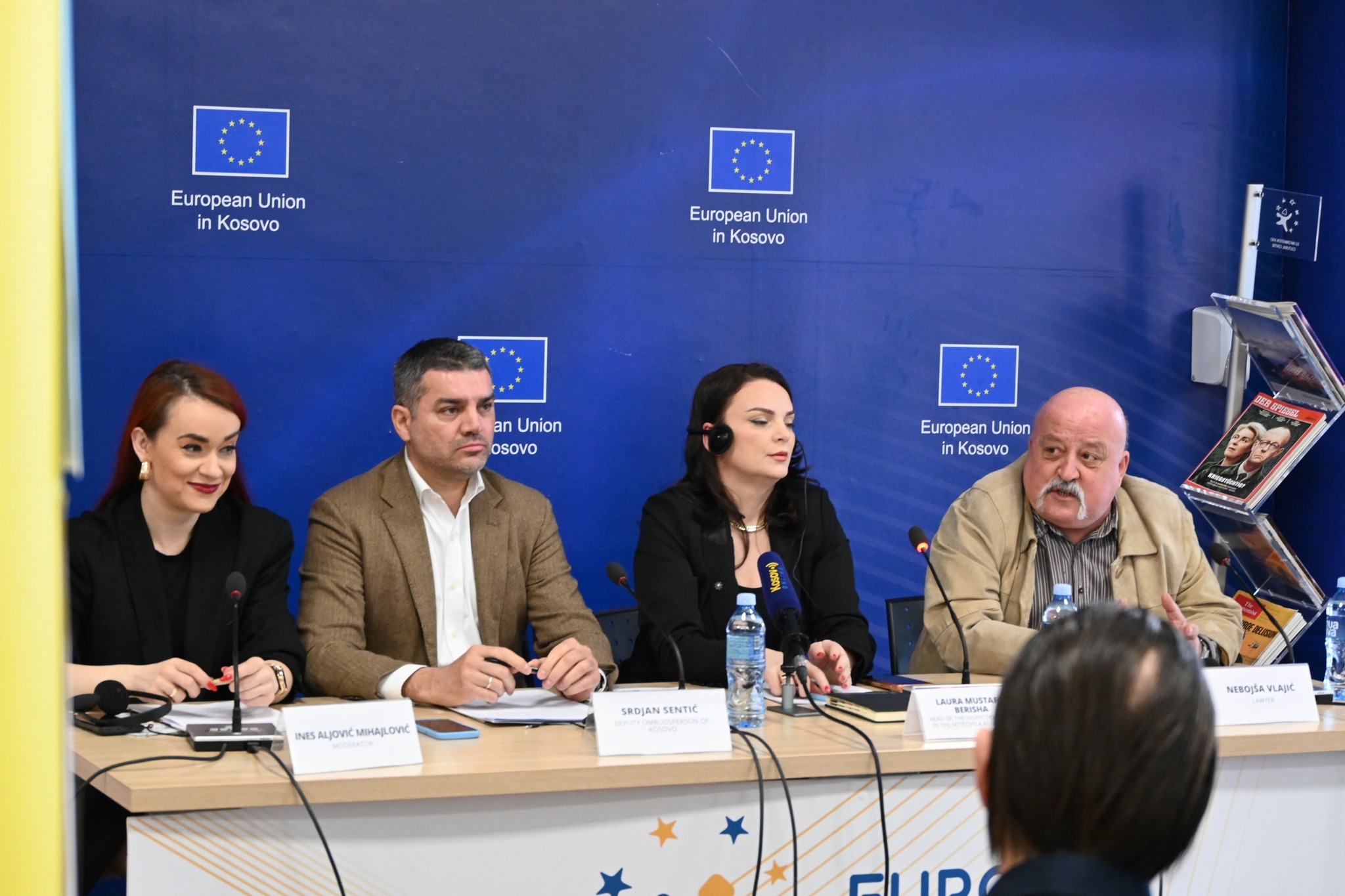
The aim of the panel discussion was to bring together representatives of relevant institutions, legal experts, and citizens in order to open a dialogue on key challenges in the field of labor rights, with a particular focus on institutional protection mechanisms and access to justice in northern Kosovo. The panelists were Laura Mustafa Berisha, Head of the Division for Inspection Supervision in the Mitrovica region; Srđan Sentić, Deputy Ombudsperson; and Nebojša Vlaijić, lawyer. The disucssion was moderated by Ines Aljović Mihajlović. The event was attended by representatives of institutions, the police, the municipality, international organizations, as well as citizens and local media.

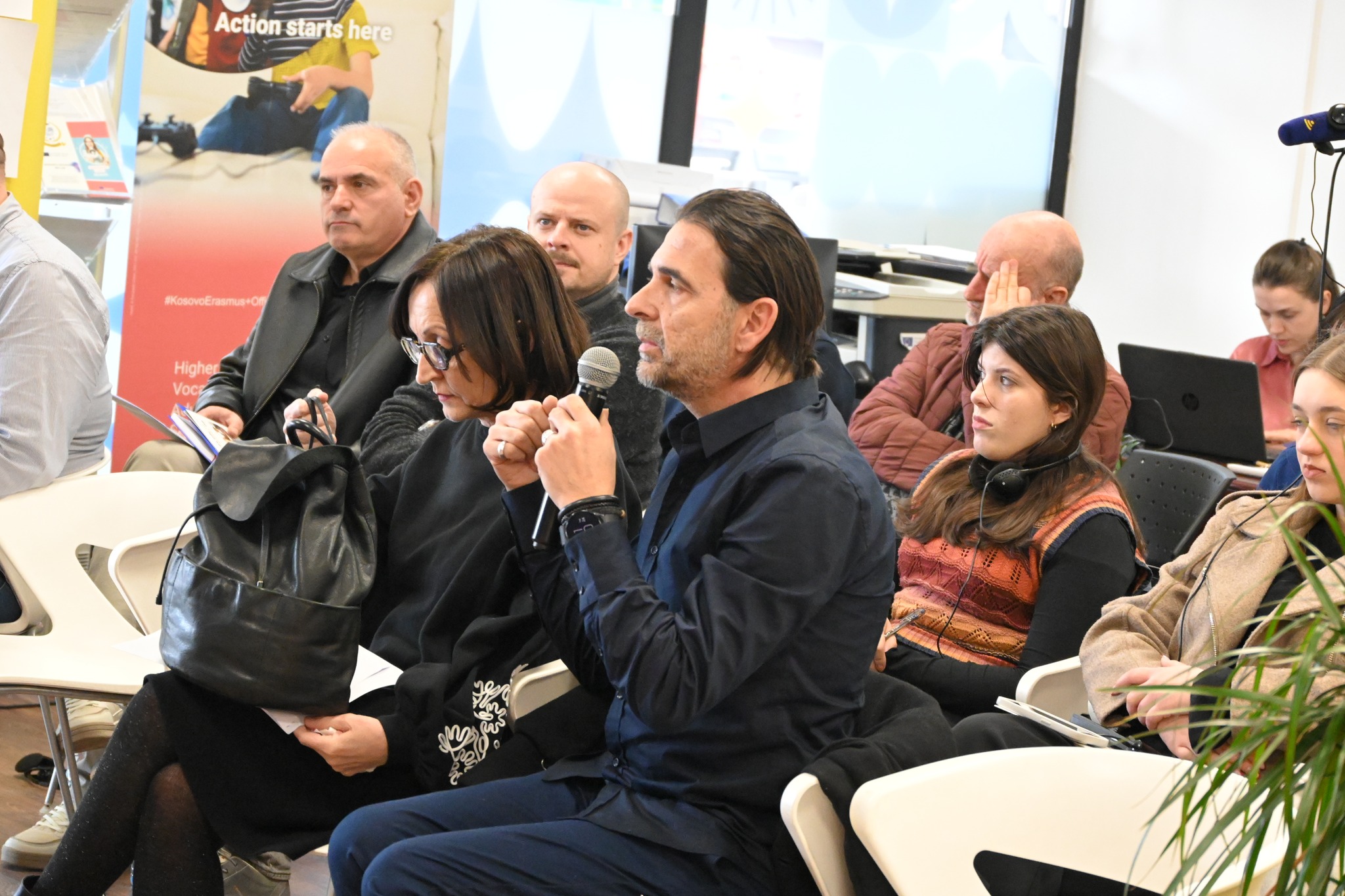
At the beginning of the event, Filloreta Byryqi and Fisnik Šopjani from CDF addressed the participants and presented the Human Rightivism program. They emphasized that Human Rightivism is focused on strengthening the protection of human rights through support to civil society organizations working on the ground, with a focus on institutional accountability, access to justice, and empowering citizens to actively claim their rights.
Key Institutional Perspectives on Labor Rights and Access to Justice
Laura Mustafa Berisha highlighted that the Labor Inspectorate has processed a significant number of citizens’ complaints to date and that its mandate has been fully extended to northern Kosovo. She stressed that the primary role of the Inspectorate is to ensure the implementation of the law and the protection of workers, and that in cases where necessary, cooperation with the police has been established to carry out inspection supervision. However, she pointed out practical challenges – the limited number of inspectors, the inability to maintain a constant presence in the field, and language barriers, as some inspectors do not speak Serbian, which complicates communication with citizens and slows down procedures. She called on citizens to actively report violations of labor rights, emphasizing that without formal complaints institutions have limited capacity to act.
Nebojša Vlaijić emphasized that labor law is one of the most complex and stressful areas of law, as it directly affects the livelihood of individuals and their families. He particularly underlined the problem of parallel systems, which creates legal uncertainty for employees who work within the Serbian system but live in the territory of Kosovo. According to him, the majority of disputes concern workers who were initially engaged in the Serbian system and later received indefinite contracts in Kosovo institutions, where in some cases they received one, two, or no salaries at all, after which payments were suspended. Court proceedings in such cases often take a long time and do not provide timely results, further deepening the sense of insecurity and distrust in the system.
Srđan Sentić presented the competencies of the Ombudsperson Institution and emphasized that labor rights are an integral part of fundamental human rights, including the right to work, the prohibition of discrimination, and the right to fair working conditions. He stressed that the Labor Inspectorate has the authority to initiate ex officio procedures, but that it is necessary to develop additional mechanisms to ensure compliance with legal obligations, including the fulfillment of quotas for the employment of members of non-majority communities. According to the data he presented, the most frequent violations of labor rights in Kosovo reported to the Ombudsperson Institution relate to unlawful dismissals, non-payment of salaries and benefits, irregularities in recruitment procedures, denial of maternity leave rights, and violations of employment rights within public institutions. He emphasized that it is crucial for the recommendations of independent institutions to be consistently implemented, because without their implementation, the protection of rights remains formal rather than substantive.
It was concluded that institutional cooperation must be improved, the capacities of the Labor Inspectorate strengthened, greater linguistic accessibility of institutions ensured, and the implementation of recommendations of independent bodies enhanced, in order to provide workers in northern Kosovo with effective and substantive access to justice.
The “Justice@Work” Project and the Practical Guide on Labor Rights
The “Justice@Work” project contributes to these efforts through educating youth about labor rights, providing free legal aid, and developing a practical guide on labor rights. The guide was developed during the project implementation through consultations with young people and direct discussions about their level of awareness, dilemmas, and the most common problems they face in the labor market. Its content was tailored to these needs and written in clear and accessible language, with the aim of providing young people and other workers with concrete information about their rights and protection mechanisms.
The Guide through Labor Rights in Kosovo is available on the website of NGO ACDC.